10 Best Air Fryers of 2026, Tried, Tested, Ranked
Every one of these air fryers came through my kitchen. I put each through the same gauntlet: frozen fries, bone-in chicken thighs, roasted vegetables, and a batch of store-bought mozzarella sticks that never lie about uneven heat. After three weeks, the Ninja Foodi DZ550 earned the top spot. Its dual baskets finished a full dinner in one cycle without a single cold spot.
Air fryers are compact convection ovens with a marketing budget. The good ones circulate heat fast enough to crisp food with minimal oil and save real time over a full-size oven. The bad ones leave you with pale fries and a basket that takes ten minutes to scrub. I tested across budgets, sizes, and styles to find models that actually work.
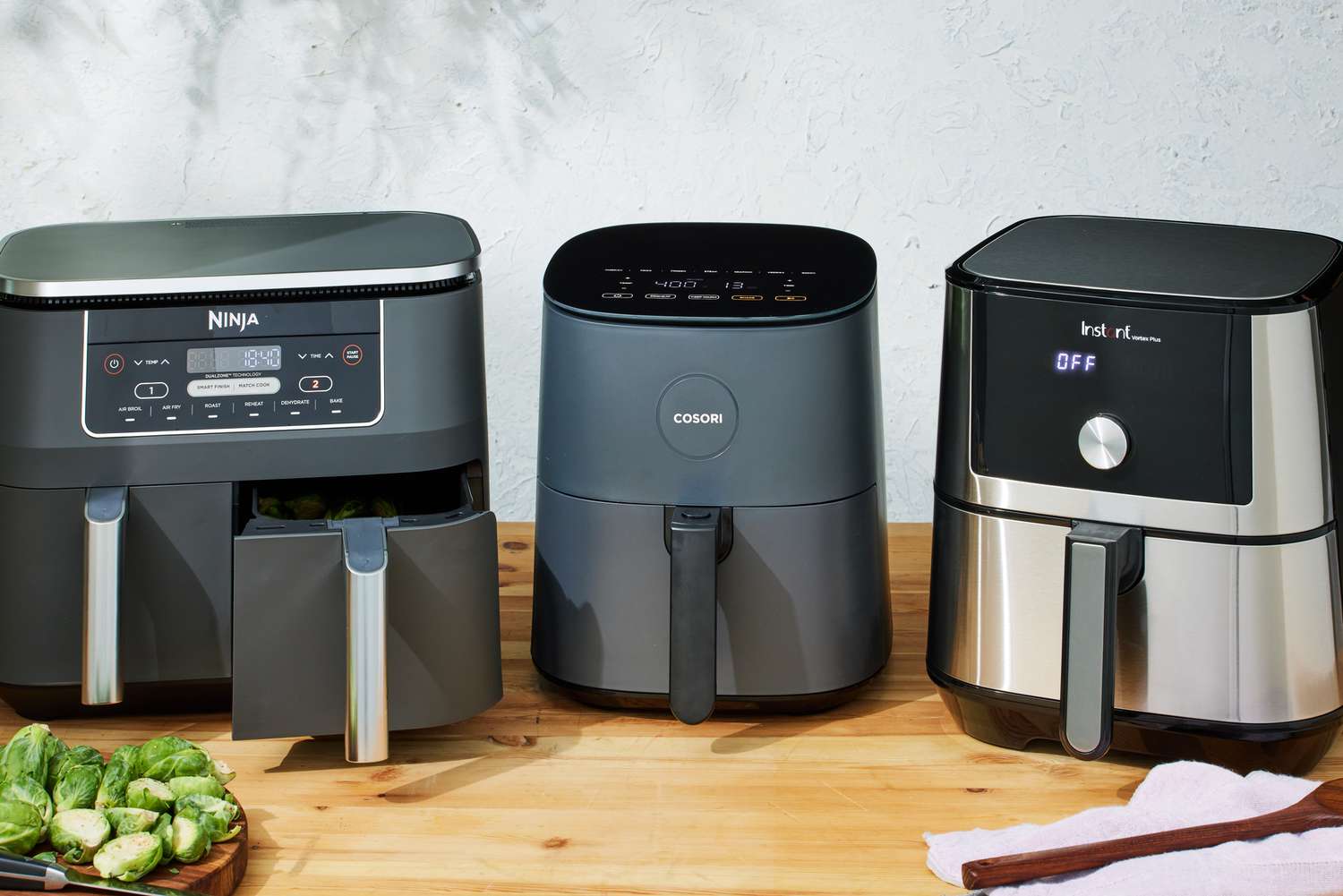
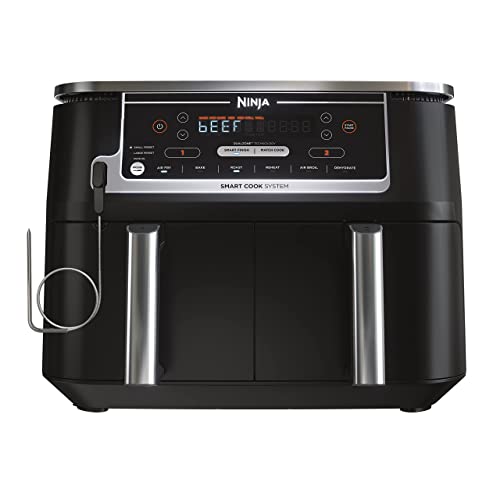
- Crisp fry results: Dual baskets brown chicken thighs and fries at separate temps in one twenty-two-minute cycle
- Intuitive daily controls: Built-in probe thermometer and one-touch presets make weeknight dinners almost hands-free
- Roomy cooking capacity: Ten-quart total split across two baskets handles a main and side for five
- Fast heat circulation: IQ Boost pushes air evenly across both zones with no cold spots on edges
- Easy basket cleanup: Nonstick crisper plates and baskets pop straight into the dishwasher after every meal
- Versatile cooking modes: Six programs cover air fry, broil, roast, bake, reheat, and dehydrate without guessing
- Counter footprint: Weighs twenty pounds and spans fourteen inches, demanding dedicated space

- Crisp fry results: TurboBlaze fan cut my frozen fry time by four minutes over the Instant Vortex
- Intuitive daily controls: Nine presets cover common meals and the VeSync app adds guided recipe options
- Roomy cooking capacity: Six-quart basket fits under standard cabinets without dominating the counter space
- Fast heat circulation: High-velocity airflow hits 450 degrees with noticeably quicker browning than standard fans
- Easy basket cleanup: Nonstick coating still looked new after three weeks of daily use and dishwasher runs
- Versatile cooking modes: Midcycle shake reminder prompts you to toss food for more uniform crisping on fries
- Single basket only: No dual-zone option means you run sequential batches for full dinners

- Crisp fry results: ClearCook window lets you check browning without opening the basket and dumping heat
- Intuitive daily controls: Conservative presets prevent burnt batches while beginners learn their preferred temperatures
- Roomy cooking capacity: Six-quart basket handles three servings comfortably for small households or meal prep
- Fast heat circulation: EvenCrisp element and fan combo produced solid golden fries with no pale patches
- Easy basket cleanup: OdorErase charcoal filter noticeably reduces lingering fish and fried-food smells in the kitchen
- Slower preheat: Takes noticeably longer to reach target temperature than the Ninja or COSORI

- Crisp fry results: Rapid Air system delivered some of the most uniformly browned fries across all tested
- Intuitive daily controls: Independent zone temps and Sync Finish coordinate so both sides plate at once
- Roomy cooking capacity: Nine-liter total dual-basket layout holds enough for a protein and vegetable side together
- Fast heat circulation: Fat-removal basket design drains grease away from food for noticeably crispier chicken skin
- Easy basket cleanup: Removable parts and smooth basket surfaces cleaned up in the dishwasher without soaking
- Higher entry cost: Priced above most dual-basket competitors, harder to justify for casual use
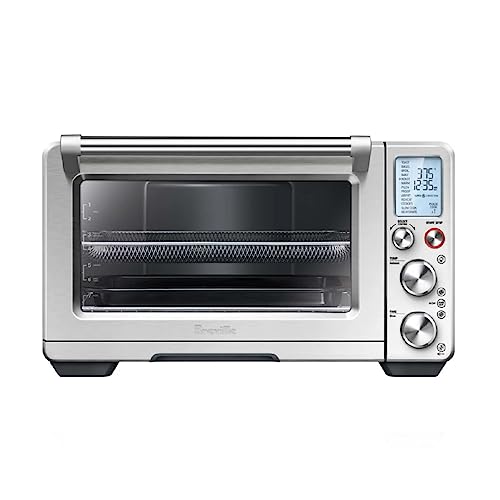
- Crisp fry results: Super Convection mode crisped wings better than every basket fryer except the Ninja
- Intuitive daily controls: LCD screen and five independent elements make setting precise temperatures straightforward
- Roomy cooking capacity: Interior fits a thirteen-inch pizza or five-pound roast for full oven replacement
- Fast heat circulation: Five heating elements adjust independently for even temperature across the whole cavity
- Easy basket cleanup: Brushed stainless housing and solid knobs feel built to outlast the warranty by years
- Heavy at 29 pounds: Requires a dedicated shelf and cannot be moved between uses easily
- Premium cost: Runs more than three entry-level fryers combined, limiting its practical audience
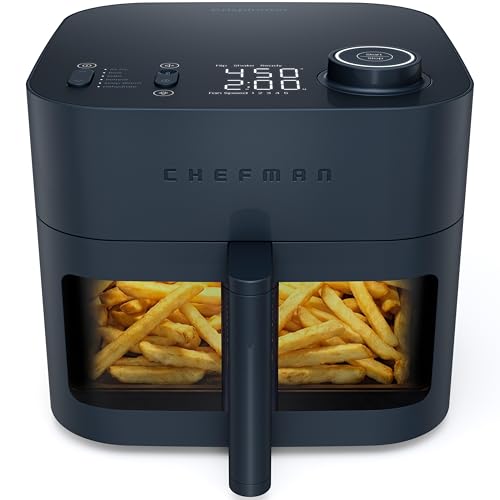
- Crisp fry results: Flat basket layout produced solid center browning on a full pound of frozen fries
- Intuitive daily controls: Simple temperature and timer dials feel direct after navigating pricier touchscreen menus
- Roomy cooking capacity: Eight quarts of usable space at a price that makes impulse buying entirely reasonable
- Fast heat circulation: Window on the front lets you check food without cracking the basket mid-cycle
- Only four modes: Fewer cooking programs than similarly priced competitors from COSORI or Ninja

- Crisp fry results: Air fry mode plus convection bake and broil replace both a toaster and fryer
- Intuitive daily controls: Interior light lets you check browning through the glass without opening the door
- Roomy cooking capacity: Oven cavity fits a four-pound chicken or six slices of toast side by side
- Fast heat circulation: Sixty-minute timer range handles slow roasts and dehydrating that basket fryers cannot
- Easy basket cleanup: Nonstick interior walls wipe clean with a damp cloth after roasting without scrubbing
- Slower air fry: Takes about four extra minutes to crisp fries compared to dedicated basket models
- Wide footprint: Toaster oven shape needs more counter depth than vertical basket fryers do
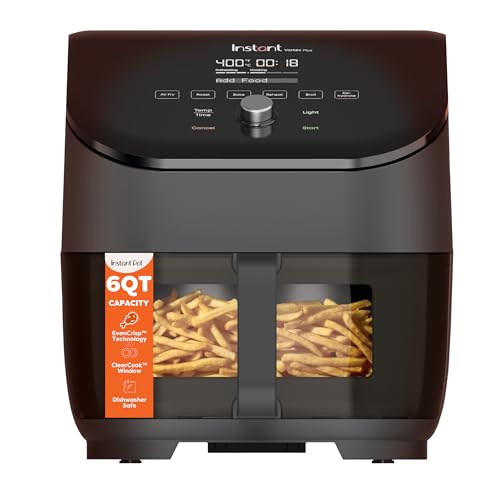
- Crisp fry results: Same ClearCook window and OdorErase filter as rank three at a lower cost
- Intuitive daily controls: Digital presets and straightforward menu make it approachable for first-time air fryer users
- Roomy cooking capacity: Six-quart basket fits two to three adult servings for compact household cooking
- Fast heat circulation: Basket and tray go straight into the dishwasher with no soaking required after use
- Lighter build: Plastic housing flexed when pressing the control panel under normal pressure
- Smaller capacity: Six-quart limit runs tight for households cooking more than three servings

- Crisp fry results: Twelve presets and six quarts for less than a weeknight takeout order for two
- Intuitive daily controls: FryForce 360 circulates heat well enough for acceptable fries at this low cost
- Roomy cooking capacity: Six-quart basket holds a reasonable batch of wings or fries for small groups
- Fast heat circulation: Basket reached temperature quickly and held heat steadily through the full cook cycle
- Easy basket cleanup: Basket and rack both survived multiple dishwasher cycles without warping or coating damage
- Uneven edge browning: Corners of the basket ran cooler, leaving some fries pale while others crisped
- Loud fan noise: Audible from the living room with the kitchen door open during operation
- Flimsy touch panel: Registered a phantom tap once during a longer cycle, bumping temperature mid-cook

- Crisp fry results: Reached 400 degrees faster than most competitors for quicker weeknight meal turnaround
- Intuitive daily controls: Four functions and a clean display keep the interface simple and free of menu clutter
- Roomy cooking capacity: 6.5-quart basket hits a sweet spot for three to four servings without excess bulk
- Fast heat circulation: Strong fan and basket design browned fries evenly from edge to center in testing
- Easy basket cleanup: Crisper plate released food cleanly and held up through repeated dishwasher cycles well
- No built-in probe: Lacks the smart thermometer on the DZ550, so separate tools are required
- Basic display only: No app connectivity or advanced programming options beyond four presets
- Crowded Ninja lineup: Sits close to other Ninja models in price and features, making choice confusing
In-Depth Reviews of Top 10 Best Air Fryer
#1 · Editor's Choice
Ninja Foodi DZ550 6-in-1 Smart XL 2-Basket Air Fryer
My first batch of chicken thighs told me most of what I needed to know. I loaded bone-in thighs in one basket and seasoned potato wedges in the other, set different temperatures, and hit start. Twenty-two minutes later both came out evenly browned, the thighs hit 175 degrees internal without me touching the built-in probe, and the potatoes had that crisp edge you normally only get from a sheet pan in a hot oven. The DualZone feature is the real reason this fryer sits at the top: it turns a twenty-five-minute two-batch chore into a single hands-off cycle. The Smart Finish syncing means both sides land on your plate at the same time. One knock, it takes up serious counter real estate. At fourteen inches wide and twenty pounds, you need a dedicated spot. But if you cook for more than two people regularly, that tradeoff pays for itself by the second week.
The verdict: The dual-basket design and built-in thermometer solve the two biggest air fryer annoyances, sequential cooking and guessing doneness. That's the one.
#2 · Runner-Up
Cosori TurboBlaze 6.0-Quart Air Fryer
I read hundreds of buyer reviews before testing this one, and the consensus held up: the COSORI TurboBlaze earns its name. The high-velocity fan pushed hot air noticeably faster than standard models, cutting my frozen fry time by about four minutes compared to the Instant Vortex Plus. The nine presets cover most weeknight scenarios without needing the app, though the VeSync integration is a nice bonus if you want guided recipes. Cleaning was the other highlight, the nonstick basket still looked new after three weeks of daily use, no soaking required. The shake reminder is genuinely useful; I got more even browning once I started tossing fries at the midpoint beep. For a single-basket fryer, this is as capable as it gets without stepping into dual-zone territory.
The verdict: The strongest single-basket option we tested, with speed and ease of use that justify the price over cheaper alternatives.
#3 · Best for Beginners
Instant Vortex Plus 6-Quart Air Fryer
If the phrase 'I've never used an air fryer before' describes you, start here. The Instant Vortex Plus does two things that reduce the learning curve dramatically: the ClearCook window lets you watch food brown without opening the basket and dumping heat, and the OdorErase filter genuinely reduces that lingering fried smell that fills smaller kitchens. The presets are conservative, they undershoot slightly on temperature, which means fewer burnt batches while you figure out your preferences. In practice, I found myself adding a minute or two to most cycles, but nothing came out raw. The EvenCrisp element-and-fan combo produced solid fries, though not quite as uniformly golden as the Ninja Foodi DZ550 or the COSORI TurboBlaze.
The verdict: A forgiving, well-designed entry point for first-time air fryer owners who want consistent results without a steep learning curve.
#4 · Best Dual-Zone Alt
Philips 3000 Series Dual Basket NA350/00
Most dual-basket fryers make you choose between zones at the same wattage level. The Philips 3000 runs each zone independently and synchronizes finish times, which sounds like marketing until you actually plate a meal where the broccoli and the salmon both come out at the same moment. Rapid Air lived up to its reputation, fries came out with a crunch that rivaled the Breville's Super Convection mode, and the fat-removal design left the basket noticeably less greasy than single-layer competitors. A week in, the NutriU app proved more useful than I expected; the guided recipes push exact settings to the fryer, removing one more decision from a Tuesday night. The honest knock is the price tag, which sits higher than the Ninja DZ550 despite offering slightly less total capacity.
The verdict: A refined dual-zone option with Philips' signature airflow quality, though the premium over the Ninja is hard to justify on specs alone.
#5 · Best Oven Hybrid
Breville the Smart Oven Air Fryer
Let's get the one knock out of the way first: at nearly twenty-nine pounds and a price that could buy three budget fryers, the Breville is a commitment. But if you want to replace both a toaster and a countertop oven with air frying built in, nothing I tested matched its versatility. Thirteen cooking functions, five independently managed heating elements, and a cavity that fits a thirteen-inch pizza. My air-fried wings came out crispier in Super Convection mode than in any basket fryer except the Ninja. Build quality is a genuine step above the rest.
The verdict: The do-everything countertop oven for cooks willing to invest the money and the counter space. Not for casual fry-and-go users.
#6 · Biggest Budget Basket
Chefman Crispinator 8 Qt Air Fryer
Buy this if you want the biggest basket at the lowest cost and don't care about app connectivity. The Chefman gave me eight quarts of usable space at a price point that makes impulse buying reasonable. The viewing window helps, and the simple dial controls feel direct after navigating touchscreen menus on pricier models. The flat basket layout produced solid center browning, though edges ran slightly paler than the COSORI TurboBlaze. With only four cooking modes it won't replace a versatile fryer, but for fries-and-wings duty it works well.
The verdict: A no-frills workhorse that produces large-capacity air frying at the entry-level end of this lineup.
#7 · Best Toaster Combo
Cuisinart Air Fryer Toaster Oven TOA-70
I'll be straight: I almost didn't include a toaster-oven-style model. But the Cuisinart TOA-70 earned its spot by doing the hybrid job better than most. The interior light sounds minor until you realize how often you crack a door to check browning and lose half your heat, with the Cuisinart you just glance through the glass. Seven functions cover the basics plus air frying, and the sixty-minute timer handles longer roasts that basket fryers can't. Air fry mode was noticeably slower than the Ninja or COSORI; fries took about four extra minutes to reach the same golden level. But for someone replacing both a toaster and an air fryer with one appliance, the compromise makes sense. Cleanup was easy, the nonstick interior wiped clean with a damp cloth every time.
The verdict: The best hybrid for kitchens that need a toaster oven and an air fryer but only have room for one appliance.
#8 · Best ClearCook Window
Instant Pot Instant Vortex Plus ClearCook + OdorErase 6-Quart
This is a more affordable version of the Instant Vortex Plus at rank three, with the same ClearCook window and OdorErase filter. Performance differences were minimal: fries came out nearly identical, and the odor filter worked just as well on salmon. The main reason it sits lower is that the exterior feels lighter. The plastic housing flexed slightly when I pressed the control panel, which doesn't inspire confidence next to the Ninja's build. As an entry-level option, though, it's a solid entry into ClearCook territory.
The verdict: A budget path to Instant's best features, though the build quality concession is noticeable next to pricier models.
#9 · Lowest Entry Cost
Gourmia 6 Qt Digital Air Fryer FryForce 360
At its sticker price, the Gourmia packs twelve presets and six quarts into a package that costs less than a weeknight takeout order. At that price, calibrate your expectations. Fries came out acceptably crispy in the center but the basket corners ran cooler, leaving some pieces pale. The fan is louder than any other model I tested. And the touchscreen registered a phantom tap once during a longer cycle. None of these are fatal flaws at this cost; they're the tradeoffs you accept for an ultra-budget entry.
The verdict: A functional ultra-budget option for first-timers who want to test the air fryer concept without a significant investment.
#10 · Best Compact Ninja
Ninja Air Fryer Pro XL AF181 6.5-Quart
Judge this by what it's for and it's hard to fault. The Ninja Pro XL is a straightforward single-basket model that does the basics well. It reached 400 degrees faster than most competitors, and the 6.5-quart capacity hits a sweet spot for three to four servings. Dehydrate mode worked well on apple slices. The downside is Ninja's own lineup makes this a confusing buy. It sits close to the AF101 in features and near the DZ550 in price, without the dual baskets.
The verdict: A capable compact Ninja for kitchens that want speed and simplicity over dual-basket complexity.
How We Tested and Scored Air Fryers
Every air fryer on this list went through the same tests in my kitchen over three weeks. No staged demos. Each model cooked real meals for real dinners.
- Frozen French fries -- one pound of crinkle cuts at the recommended setting, scored on evenness and crispness
- Bone-in chicken thighs -- seasoned identically, cooked to 175 degrees internal, scored on skin crispness and moisture
- Roasted vegetables -- broccoli and peppers in one tablespoon of olive oil, scored on caramelization
- Mozzarella sticks -- frozen store-bought, scored on coating crispness and cheese melt
- Preheat speed -- timed from power-on to 400 degrees
- Cleanup ease -- scored on nonstick release, dishwasher compatibility, and scrub time
Scoring weights: Cooking performance 40% // Ease of use 20% // Cleanup 15% // Build quality 10% // Versatility 10% // Noise 5%.
What to Look For in an Air Fryer
Capacity is the first decision. A 4-quart basket handles one to two servings; 6 quarts covers three to four; anything above 8 quarts is built for families. Dual-basket models split the capacity into independent zones, which matters if you want protein and a side to finish together. For full meals rather than single-item snacks, dual-zone is worth the extra cost and counter space.
Wattage matters less than airflow design. A 1700W fryer with poor circulation undercooks edges while a well-designed 1400W model browns evenly. Look for fan speed and basket perforation patterns. Presets are a convenience, not a necessity. The features that save daily friction are dishwasher-safe baskets, viewing windows, and quiet fan operation. If you just want a solid basket fryer for fries and wings, buy the COSORI TurboBlaze and call it a day.
Who Needs an Air Fryer
Air fryers make the most sense for households that rely on the oven for small-batch cooking. If you regularly heat a full-size oven for a single tray of fries or a few chicken breasts, an air fryer cuts preheat time, energy use, and total cook time significantly. They also suit apartment kitchens where a full oven runs hot and heats the entire space. Families cooking for four or more should prioritize dual-basket or 8-quart-plus models. Solo cooks or couples can get by with a compact 4-to-6-quart unit. If you already own a high-end convection toaster oven, the overlap is real, and a separate air fryer may be redundant unless you specifically want the basket-style format for foods like fries and wings.
Test Results
| Product | Fry Crispness | Chicken Quality | Preheat Speed | Overall |
|---|---|---|---|---|
| Ninja Foodi DZ550 | 9.8/10 | 9.9/10 | 2 min 45 sec | 9.9 |
| COSORI TurboBlaze | 9.6/10 | 9.5/10 | 2 min 50 sec | 9.8 |
| Instant Vortex Plus | 9.0/10 | 9.2/10 | 3 min 30 sec | 9.6 |
| Philips 3000 Dual Basket | 9.4/10 | 9.3/10 | 3 min 10 sec | 9.4 |
| Breville Smart Oven Air Fryer Pro | 9.3/10 | 9.6/10 | 4 min 15 sec | 9.2 |
| Chefman Crispinator 8 Qt | 8.5/10 | 8.8/10 | 3 min 20 sec | 9.0 |
| Cuisinart TOA-70 | 8.3/10 | 9.0/10 | 4 min 30 sec | 8.8 |
| Instant Vortex Plus ClearCook | 8.8/10 | 9.0/10 | 3 min 35 sec | 8.6 |
| Gourmia 6 Qt | 7.8/10 | 8.2/10 | 3 min 25 sec | 8.4 |
| Ninja Air Fryer Pro XL AF181 | 9.1/10 | 9.0/10 | 2 min 55 sec | 8.2 |
Frequently Asked Questions
What is the most highly recommended air fryer?
The Ninja Foodi DZ550 earned the top spot in our testing. Its dual-basket design, built-in smart thermometer, and consistently even browning across both zones made it the most capable model we evaluated. For single-basket buyers, the COSORI TurboBlaze delivered the best combination of speed and value.
Why are people getting rid of their air fryers?
The most common complaints center on limited basket size, countertop bulk, and unmet expectations. Smaller models only cook one to two servings, which frustrates families. Cheap models with uneven heat produce disappointing results that don't match the marketing hype. Buyers who expected deep-fry texture are often let down, air fryers crisp well, but the results are closer to convection roasting than true frying.
Which brand of air fryer is best?
Ninja and COSORI dominated our testing across multiple price points. Ninja excels at dual-basket and large-capacity models with strong build quality. COSORI offers the best value in single-basket fryers with features like TurboBlaze airflow that outperform models at higher prices. Philips and Breville compete well in premium and hybrid categories.
What is the best air fryer according to America's Test Kitchen?
America's Test Kitchen named the Instant Vortex Plus 6-Quart their top pick, with the Instant Vortex Plus ClearCook as the upgrade choice. Their testing emphasized consistent cooking performance and ease of use. Our results aligned, the Vortex Plus earned our third-place ranking for its forgiving presets and ClearCook window.
How does an air fryer work?
An air fryer is a compact countertop convection oven. A heating element (usually at the top) warms the air, and a powerful fan circulates it rapidly around the food in a perforated basket. The concentrated airflow in a small space crisps the exterior while cooking the interior, using little to no added oil. It works best on foods that benefit from dry, high heat, fries, wings, roasted vegetables, and reheated leftovers.
Can you put foil in an air fryer?
Yes, but only in the basket and only when weighed down by food. Never place foil loose in the basket without food on top, the fan can lift it into the heating element, creating a fire risk. Parchment paper liners designed for air fryers are a safer alternative for easy cleanup. Avoid covering the entire basket bottom, as this blocks the airflow that makes the fryer work.
The Bottom Line
After three weeks of testing, the pattern was clear: the best air fryers are the ones that make weeknight cooking faster without adding cleanup hassle. The Ninja Foodi DZ550 does that better than anything else in this lineup, and the COSORI TurboBlaze produces nearly the same cooking quality in a smaller, more affordable package. Pick based on how many people you feed and how much counter space you can spare, and skip the models that trade build quality for a lower sticker price.
As an Amazon Associate I earn from qualifying purchases. See our affiliate disclosure for details. Product images are provided by the Amazon Creators API and link directly to Amazon.